Fall in the Alentejo: The Season Nobody Told You About
There’s a common perception of the Alentejo: that of a plain you cross under a merciless sun, searching for shade and water. That’s true in August. But anyone who only knows the Alentejo in the summer is unaware of its most bountiful season.
Fall arrives slowly. Temperatures drop to that exact point where you can take a leisurely walk at noon; the days remain long, and the light changes color—it grows lower, more golden, and moves more slowly through the oak groves. It’s also the time when the land comes alive: the grape harvest fills the wineries with people and the scent of grape must, and shortly afterward the olive harvest begins, with olive presses starting up across the region.
A plain you can hear
What stands out most in the fall is the sound—or the lack thereof. Without the heat driving everyone into the shade or to the pool, the plain gives back its own sounds: the wind in the holm oaks, the passing birds, the silence between one conversation and the next. It’s the season when the Alentejo behaves just as it has always wanted to be experienced—slowly, in no hurry to reveal anything.
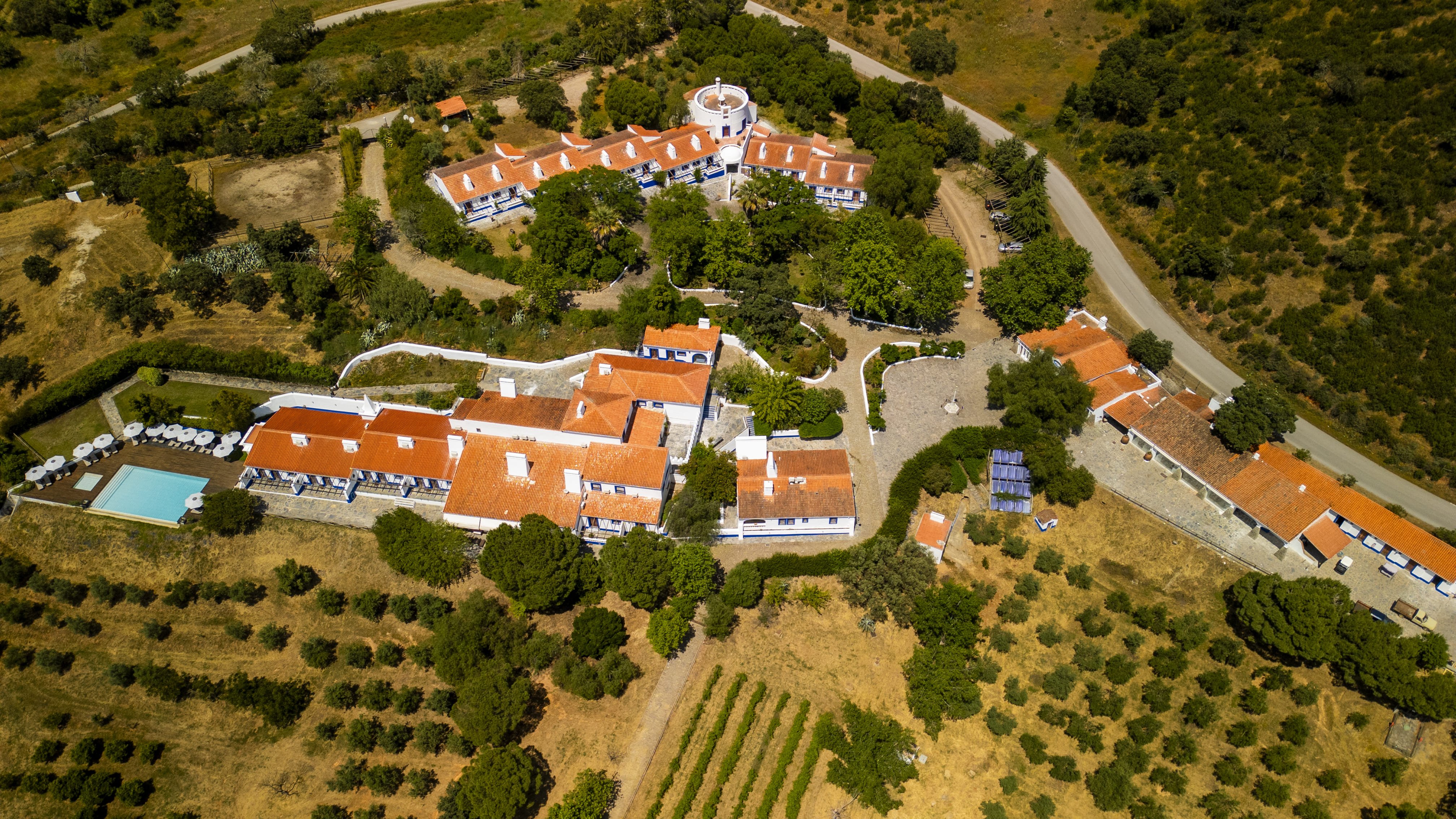
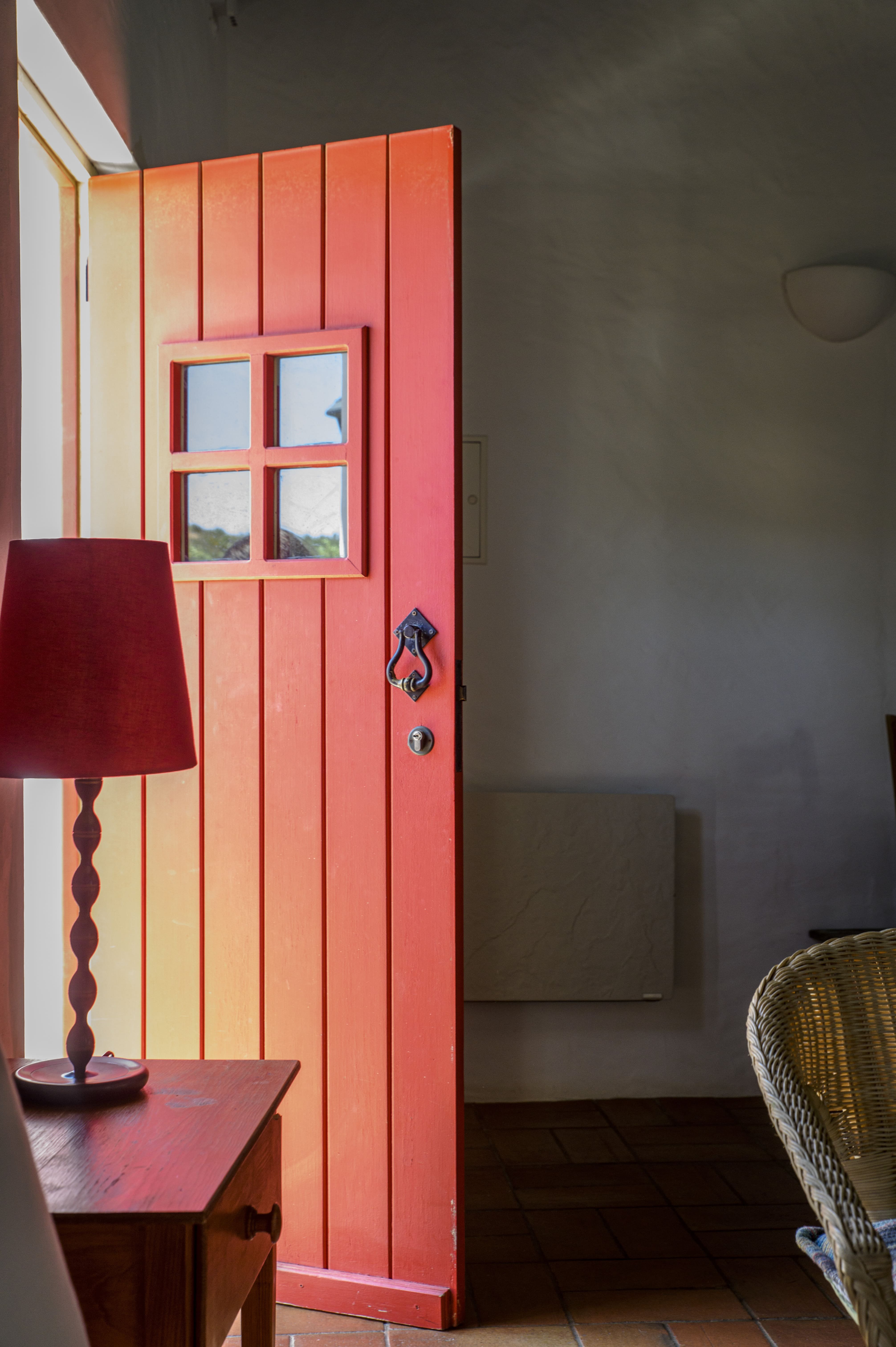
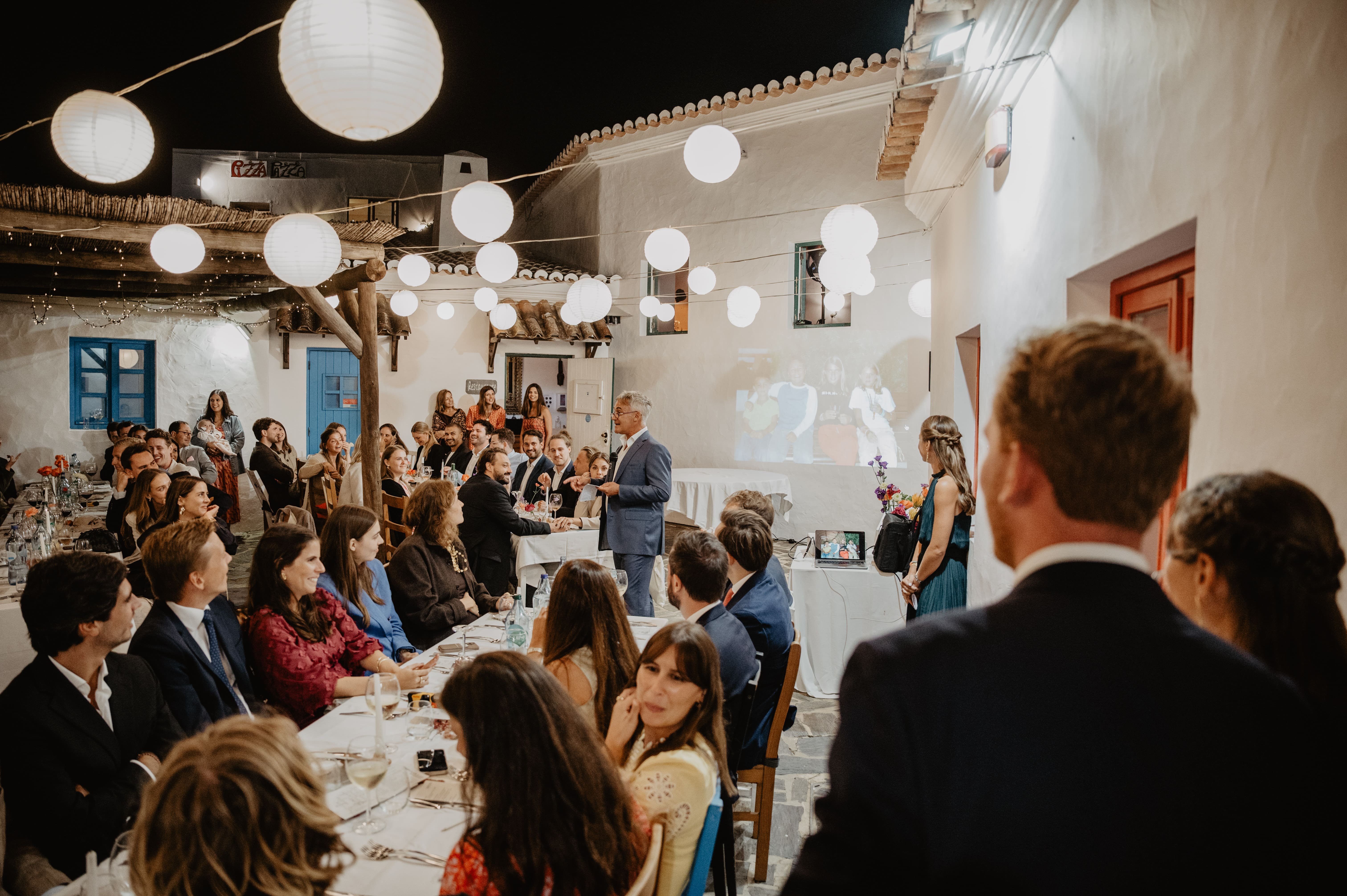
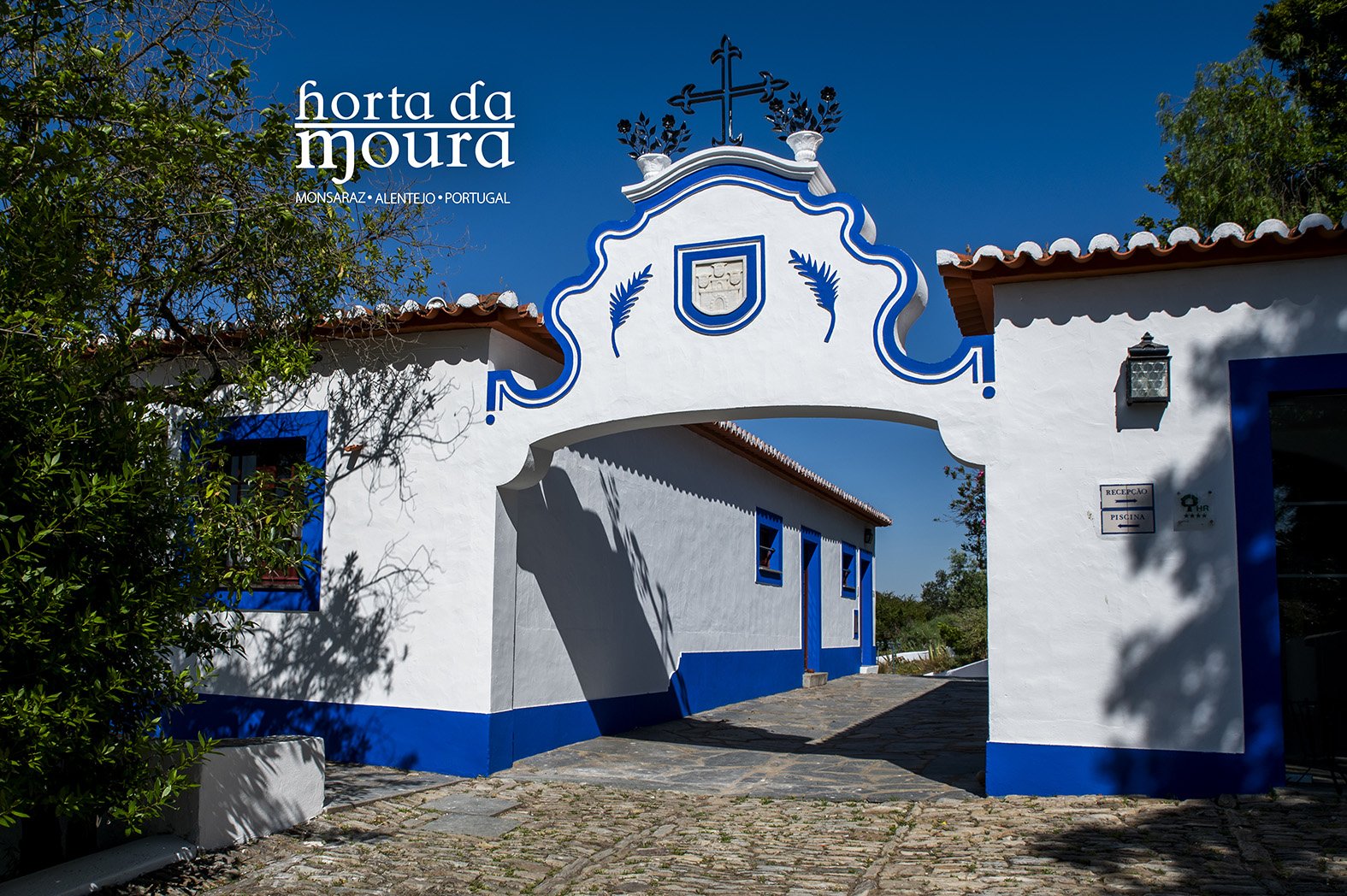
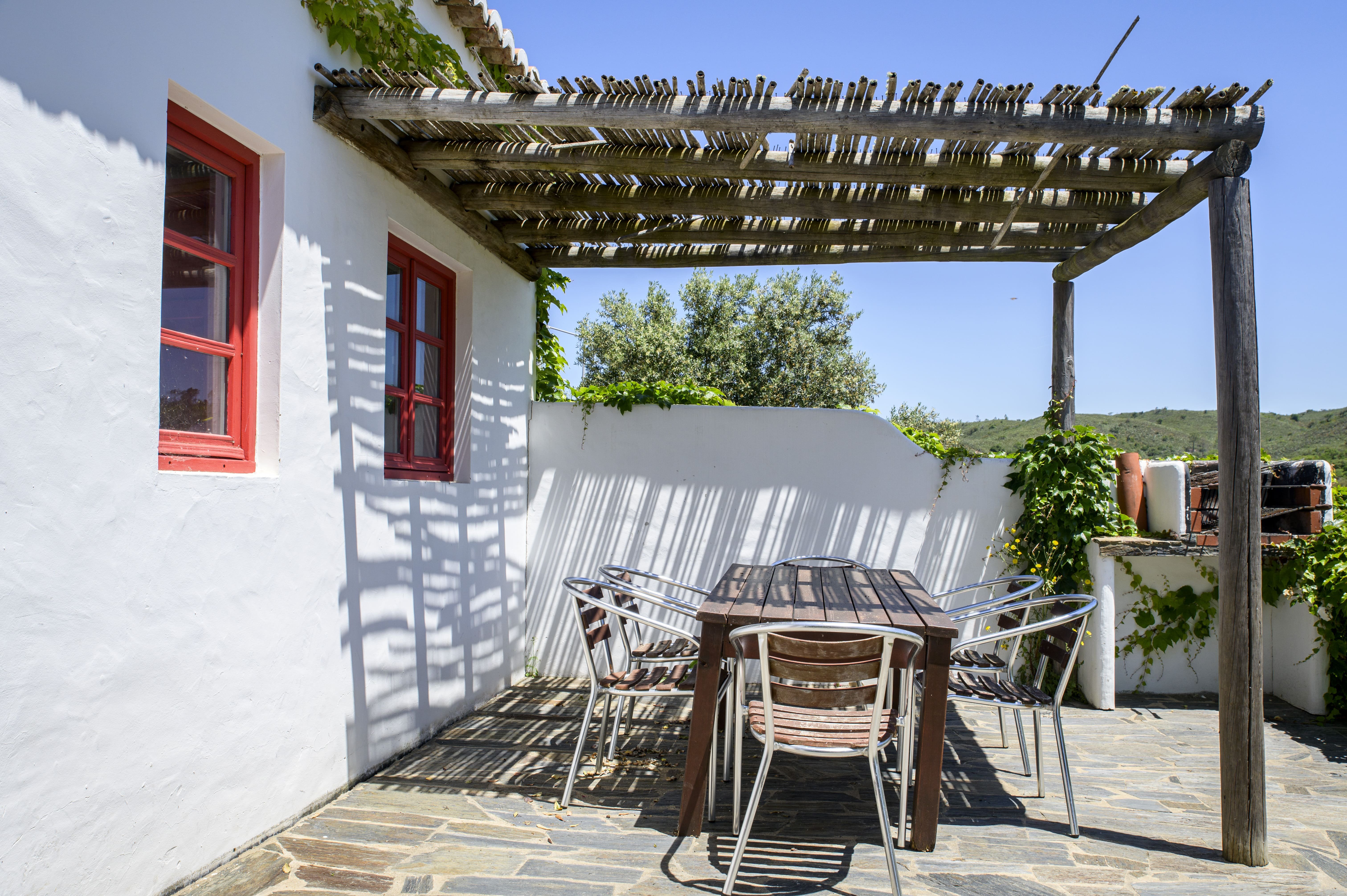
At Horta da Moura, this change is felt in every corner of the property: in the cooler mornings by the Alqueva Dam, in dinners that no longer need to wait until nightfall to be cozy, in the way the light streams through the stone windows at a different time of day. It’s also the ideal time to taste the estate’s olive oils, harvested practically right outside the door.
A Village That's Coming Back to Life
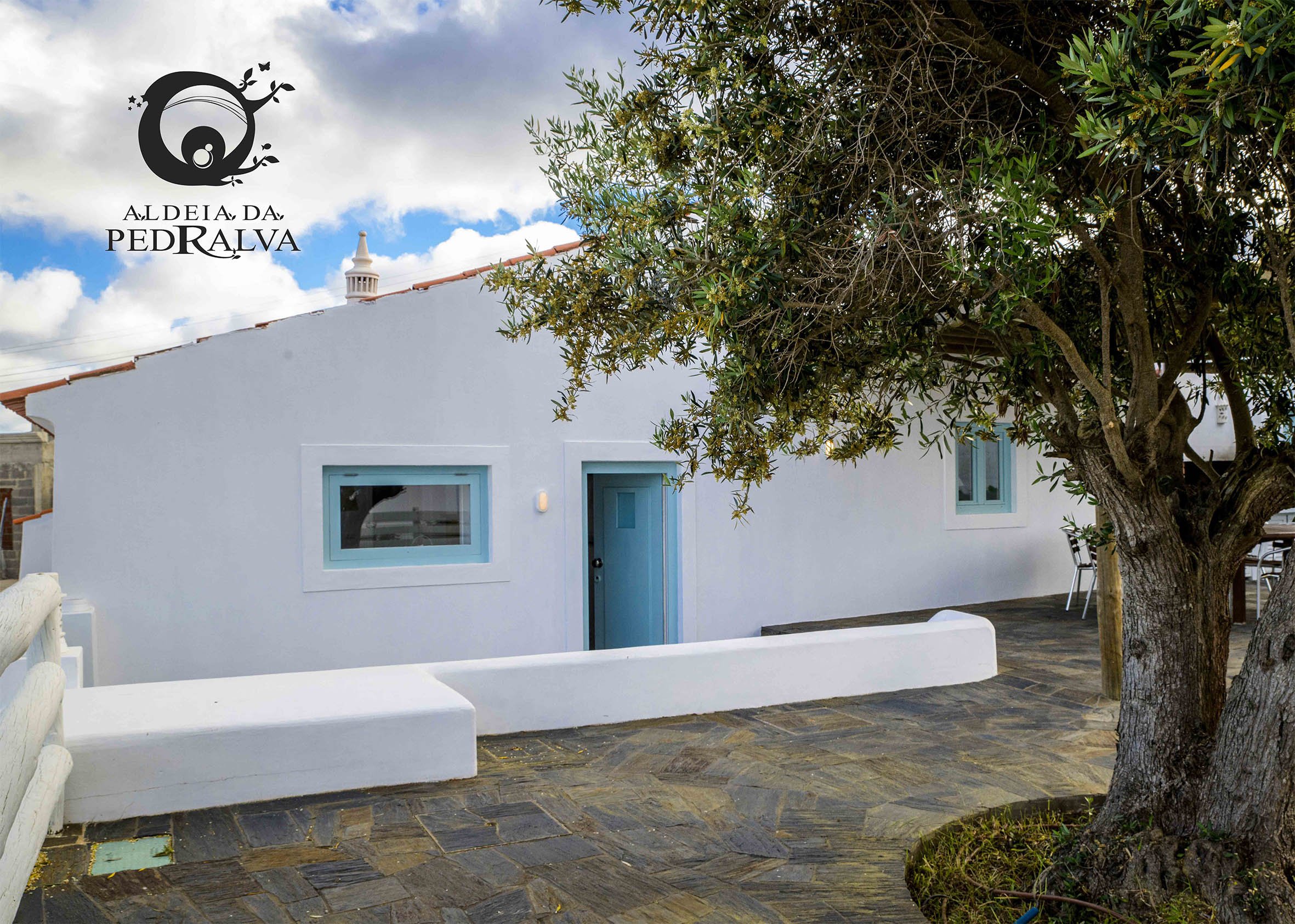
Further south, in the village of Pedralva, fall brings a different kind of stillness—that of an entire village which, without the bustle of August, returns to what it has always been: a place where people cross paths in the narrow streets, among stone houses restored with the care of those who knew they were worth preserving.
Why It's Worth Planning Your Trip in Advance
Those who wait for spring to “escape the heat” often find that the Alentejo is already more crowded and more predictable. Fall is still, for now, a well-kept secret—and it is precisely this discretion that makes it special: fewer people, more space to notice the details, more reasonable rates, and a landscape that changes from week to week as the vineyards turn copper-colored.
If you're looking for the Alentejo without the crowds, this is the season to mark on your calendar.
Book your stay: Horta da Moura → Pedralva Village →